CA Glue for Boatbuilders
August 2026
Nick Schade, one of the world's best-known designers and builders of kayaks, tells us why super glue is turning up in every boatbuilder's toolbox.
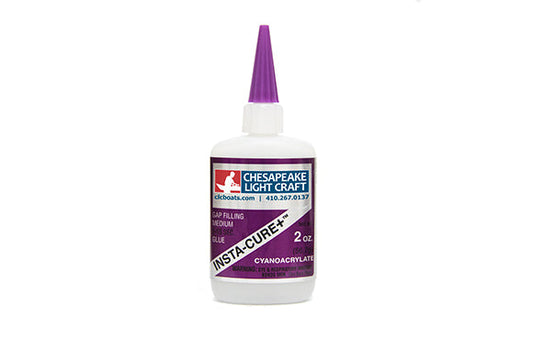
I use Cyanoacrylate (CA) glue—otherwise known as super glue—to hold together puzzle joints, seams, and other parts of small boats before they are made permanent with epoxy.
The great thing about CA glue is that it sets up almost instantaneously. It's a fast way to "tack weld" parts together in stitch-and-glue boat designs (among others). Pay attention to the alignment of parts, because when you activate the CA glue with the accelerant it's going to cure RIGHT NOW!

Joints in a stitch-and-glue boat tack-welded together with CA glue aren't especially strong. But CA glue is strong enough to hold hull parts together until the boat is fiberglassed. To secure puzzle joints in hull panels, for example, I apply small dots of glue right onto the seam between the two panel parts. The "gel" or "medium" viscosity CA glue will flow into seams, but it's thick enough to bridge small gaps. Place dots every inch (a couple centimeters) or so.

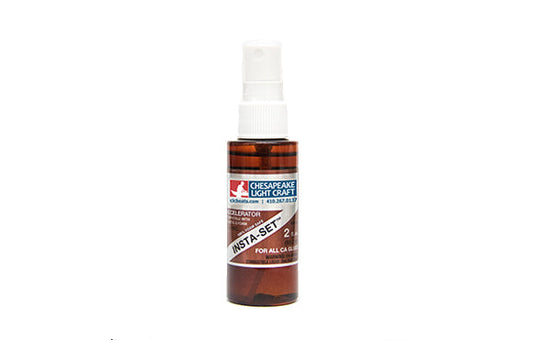
Hold the puzzle joint tight and flush with one hand and give it a quick spray with CA glue accelerant. This will dry the glue in a couple of seconds. Don't get your fingers in the glue or you may become a permanent part of the boat!
I give the glue dots a light sanding when I'm done, so that the dots are flush with the surface. The CA glue that soaked into the seam should be enough to hold the joint together.
I use CA glue to hold hull panels together in stitch-and-glue kayaks. I stitch the parts together with copper wire in the usual fashion, then tack-weld the parts with dots of CA glue. At that point, I can remove the copper wires, touch up any rough spots, then get on with fiberglassing parts. (CLC has adopted this procedure on a number of small boat designs, in addition to kayaks.)
Sometimes these CA glue "tack-welds" might pop loose, so handle the parts carefully. But don't fret if they pop apart. Just re-glue them—and use a little more CA glue if necessary.
If you use CA glue on a boat hull that you intend to varnish, be meticulous in policing up runs or big stains of the CA glue on the wood. Dribbles of CA glue can show up as a permanent stain beneath clear coats of epoxy and varnish. Keep a rag and denatured alcohol nearby to swab up any spills.
Need to UN-STICK something you've bonded with CA glue? CLC has "Un-Cure," which quickly melts CA glue joints.
See some of Nick Schade's kayak building projects here.